
Baseball Shoulder and Elbow Injuries in Connecticut
Baseball throwing places repeated demands on the shoulder and elbow. Over time, those forces can contribute to elbow injuries such as a ulnar collateral ligament (UCL) sprain or tear, and shoulder problems such as SLAP tears, rotator cuff irritation or tearing, and internal impingement. These conditions can cause overlapping symptoms, so an accurate diagnosis depends on the athlete’s history, examination, and, when appropriate, imaging.
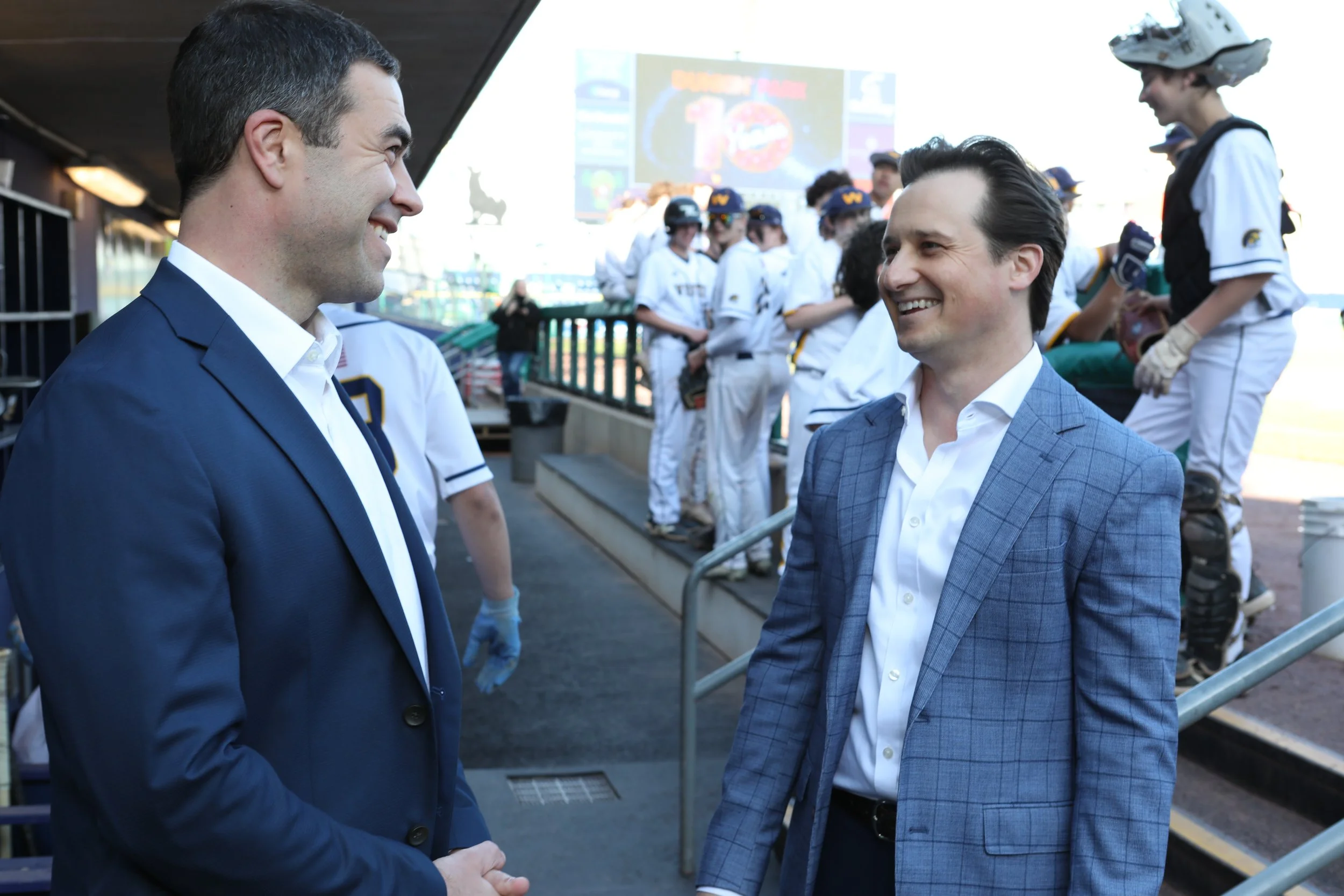
At Orthopaedic Sports Specialists, Dr. Alex G. Dukas and Dr. Christian A. Merrill evaluate baseball-related shoulder and elbow injuries. They have extensive training in the most up to date surgical techniques and experience taking care of professional and D1 athletes. Dr. Dukas and Dr. Merrill exclusively serve the team physicians for the Hartford Yard Goats, the Double-A affiliate of the Colorado Rockies. Dr. Dukas separately takes care of UCONN Baseball. Our team works with athletes to understand their symptoms, goals, and season demands and to develop an individualized treatment plan.
Common Baseball Elbow Injuries
Ulnar Collateral Ligament (UCL) Injury
The UCL is on the inner side of the elbow and helps resist the forces placed on the arm during throwing. Repetitive throwing can gradually stretch or damage the ligament; an acute injury can also cause a tear.
UCL symptoms may include inner-elbow pain during or after throwing, difficulty continuing to throw, or a change in throwing speed or control. Treatment depends on the tear’s location and severity, the athlete’s goals, and the response to nonsurgical care. Options may include activity modification and rehabilitation, UCL repair in selected injuries, or UCL reconstruction when indicated. (Click here for more information on UCL injuries)
Other Throwing-Related Elbow Problems
Not all throwing-related elbow pain comes from a UCL tear. Other causes can include irritation of the flexor-pronator muscles or tendons, ulnar nerve irritation, stress injuries, or bone-related impingement. Identifying the source of pain helps guide treatment.
Common Baseball Shoulder Injuries
SLAP Tears
The labrum is a rim of cartilage that helps deepen the shoulder socket. A SLAP tear affects the upper part of the labrum, near where the biceps tendon attaches. In a throwing athlete, symptoms may include deep shoulder pain, reduced throwing endurance, or difficulty throwing at the usual level.
An MRI finding does not always explain an athlete’s symptoms or mean surgery is needed. Treatment decisions take into account the athlete’s history and examination, the specific imaging findings, and response to rehabilitation.
Internal Impingement
Internal impingement describes contact between the rotator cuff and the back of the shoulder socket that can occur when the arm is raised and rotated back during throwing. In some athletes, this motion is associated with posterior shoulder pain, tightness, altered shoulder motion, or irritation of the labrum or rotator cuff.
Internal impingement is assessed as part of the athlete’s overall shoulder function. It is not diagnosed or treated based on one imaging finding alone.
Rotator Cuff Injuries
The rotator cuff helps control shoulder movement and stability. Repetitive throwing can irritate the cuff or, in some cases, contribute to partial tearing. Athletes may notice shoulder pain, fatigue, or difficulty maintaining performance. Examination helps distinguish rotator cuff symptoms from labral, biceps, or other shoulder problems.
Evaluation and Diagnosis
A thorough evaluation includes a discussion of when symptoms began, throwing volume and position, recent changes in workload, and the athlete’s goals. The examination may assess the shoulder and elbow, motion, strength, stability, and the way the arm works with the rest of the body.
X-rays or advanced imaging such as MRI may be recommended when the results could help clarify the diagnosis or change the treatment plan. Imaging findings are considered alongside symptoms and the physical examination.
Treatment and Return to Throwing
Many baseball-related shoulder and elbow injuries are initially treated without surgery. Depending on the diagnosis, a plan may include a temporary change in throwing activity and rehabilitation to address motion, strength, shoulder-blade control, and the coordination of the arm and body during throwing. A gradual, supervised return-to-throwing program may be recommended when the athlete is ready.
Surgery may be considered for certain injuries when symptoms continue despite appropriate nonsurgical treatment or when the injury and the athlete’s goals make surgery a reasonable option. The procedure and recovery plan depend on the specific condition. Return to throwing and competition is gradual and based on the athlete’s progress; it cannot be determined by a single test or a fixed timeline.
The Role of Physical Therapy
Physical therapy is an important part of treating throwing-related shoulder and elbow injuries and preparing athletes to return to sport. Our physical therapists work closely with athletes and the Orthopaedic Sports Specialists team to improve strength, mobility, endurance, and throwing mechanics.
Our therapists have extensive experience and sports-specific training, and regularly work with a high volume of athletes, including baseball players and other overhead athletes. Rehabilitation may address the shoulder, elbow, shoulder blade, trunk, and lower body, since throwing mechanics involve the whole body. Each program is tailored to the athlete’s injury, position, season, and goals.
Improving mechanics and addressing strength or mobility limitations may help reduce modifiable factors that contribute to injury. Physical therapy also helps guide a gradual return to throwing and monitor progress along the way.
When Should a Player Be Evaluated?
A player should be evaluated for recurring shoulder or elbow pain, pain that interferes with throwing, or a noticeable decline in throwing ability. Continuing to throw through significant or worsening pain may aggravate an injury. For young athletes, it is also important to consider growth-related injuries that can occur in the developing shoulder or elbow.
Baseball Injury Care in Glastonbury, Connecticut
If shoulder or elbow pain is affecting your ability to throw, the sports medicine team at Orthopaedic Sports Specialists can evaluate the injury and discuss treatment options. Contact the team at Orthopaedic Sports Specialists to evaluate your injury and discuss both surgical and nonsurgical treatment options. Alex G. Dukas, MD and Christian A. Merrill, MD, MBA
We treat athletes and active patients throughout Glastonbury, Greater Hartford, Connecticut, and the surrounding New England region.
Orthopaedic Sports Specialists
84 Glastonbury Boulevard, Suite 101
Glastonbury, CT 06033
860-652-8883